Archives
- 2026-07
- 2026-06
- 2026-05
- 2026-04
- 2026-03
- 2026-02
- 2026-01
- 2025-12
- 2025-11
- 2025-10
- 2023-07
- 2023-06
- 2023-05
- 2023-04
- 2023-03
- 2023-02
- 2023-01
- 2022-12
- 2022-11
- 2022-10
- 2022-09
- 2022-08
- 2022-07
- 2022-06
- 2022-05
- 2022-04
- 2022-03
- 2022-02
- 2022-01
- 2021-12
- 2021-11
- 2021-10
- 2021-09
- 2021-08
- 2021-07
- 2021-06
- 2021-05
- 2021-04
- 2021-03
- 2021-02
- 2021-01
- 2020-12
- 2020-11
- 2020-10
- 2020-09
- 2020-08
- 2020-07
- 2020-06
- 2020-05
- 2020-04
- 2020-03
- 2020-02
- 2020-01
- 2019-12
- 2019-11
- 2019-10
- 2019-09
- 2019-08
- 2018-07
-
Although high concentrations of SCR
2021-02-09
Although high concentrations of SCR7-G and SCR7-R inhibited LigIV as reported [11], the SCR7 derivatives were more effective inhibitors of LigIIIα and, in particular, LigI. Although it is possible that differences in the DNA substrate underlie this discrepancy, it appears more likely that this refle
-
We note that there are slight qualitative
2021-02-09
We note that there are slight qualitative differences among the similar time-optimal protocols. We attribute this to the challenging nature of our PDE and ODE state constrained optimization problem. While our optimization algorithm was able to converge to local optima in each case, it is likely that
-
The desire for COTS products and some potential problems
2021-02-09
The desire for COTS products––and some potential problems There are also technological reasons in support of the use of OTS products. For example, Dawkins and Riddle (2000) point out that the relatively small safety-related systems market cannot sustain the rate of technological advancement stimula
-
br Conclusions In the present study decreased
2021-02-09
Conclusions In the present study, decreased AChE and increased BuChE and BeChE activities were observed in greenhouse workers relative to control subjects; however, these changes cannot be related to OP exposure but likely to pesticide-induced oxidative stress or a mild inflammatory state. The in
-
br Conflict of interest br Acknowledgements
2021-02-09
Conflict of interest Acknowledgements This work was supported in part by JSPS KAKENHI Grant Number 26292031. We thank Nissan Chemical Industries, Ltd. for the gift of the sample of fluralaner. Introduction As one of the most common cancers in southern China and southeast Asia, nasopharynge
-
Plant uptake of P from OA
2021-02-09
Plant uptake of P from OA could also be affected by arbuscular mycorrhizal fungi (AMF). Approximately 80% of terrestrial plant species form symbiotic associations with AMF (Smith and Read, 2010) which can enhance plant P uptake (Facelli and Facelli, 2002, Pearson and Jakobsen, 1993, Tibbett, 2000).
-
EPAC induces SOCS gene expression in VECs resulting
2021-02-09

EPAC1 induces SOCS3 gene expression in VECs, resulting in suppression of the JAK–STAT activation initiated by the sIL-6Rα/IL-6 trans-signalling complex [67]. EPAC1 regulates SOCS3 gene induction through the activation of C/EBP and c-Jun transcription factors, which interact directly with the SOCS3 p
-
Accumulating evidence suggests that certain
2021-02-09
Accumulating evidence suggests that certain abnormal emotional traits, such as impulsive aggression and cluster B personality, are associated with suicidal behaviors (Currier and Mann, 2008, Mann et al., 2009, Rujescu et al., 2007, Turecki, 2005). Impulsive aggression appeared to be associated with
-
Our data demonstrate that MPO increased ETRB
2021-02-09

Our data demonstrate that MPO increased ETRB mRNA expression, which translated into an increase in ETRB protein expression, which proved to be dependent on the enzyme's catalytic activity. Of importance, addition of MPO was sufficient to increase ETRB expression, revealing that endogenous (endotheli
-
br Regulation of cadherin switching The downregulation of E
2021-02-09
Regulation of cadherin switching The downregulation of E-cadherin during cadherin switching is induced by multiple mechanisms, including methylation of the E-cadherin promoter and signaling pathways that activate E-cadherin-suppressing transcription factors [[61], [62], [63]]. During the progress
-
br EBI structure and expression The
2021-02-09

EBI2 structure and expression The gene encoding EBI2 was originally identified together with EBI1 (CCR7) as the most highly upregulated gene in Epstein–Barr virus-infected Burkitt's lymphoma cells [18]. EBI2 belongs to the rhodopsin-like subfamily of seven transmembrane GPCRs [19]. Although it is
-
Our data furthermore suggest that Ch h induced oxysterols co
2021-02-09
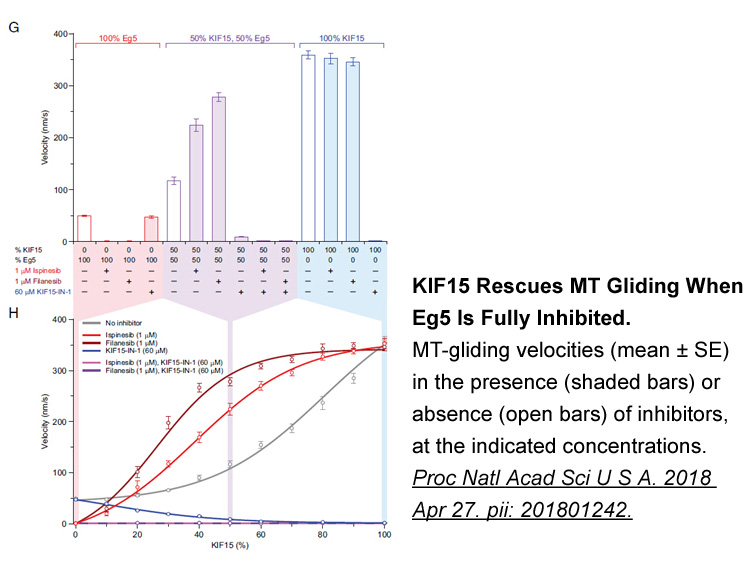
Our data furthermore suggest that Ch25h-induced oxysterols could play an important role in modulating the immune cell migration. Mechanistically, we observed impaired trafficking of CD44+CD4+ T cells in mice deficient for Ch25h. CD44+CD4+ T cells lacking EBI2, the receptor of 7α-25OHC, were delayed
-
Several reports have exploited the
2021-02-09
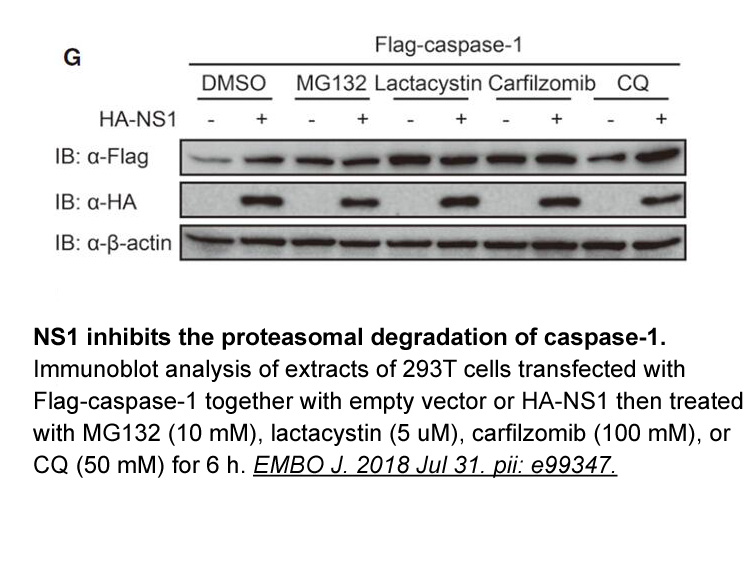
Several reports , , , , have exploited the application of HRM for detecting differentially methylated DNA. Even though DNA methylation analysis by HRM cannot determine the methylation status of individual CpGs, it does provide a robust and inexpensive method to differentiate DNA based on the overal
-
Fig D shows that E lagascae VIR E gives
2021-02-08
Fig. 2D shows that E. lagascae VIR E gives two species of radioactive TAG: one represents 45% of total labelled TAG and the smaller more-polar spot (15%) is probably derived from the endogenous 1,2-divernolin instead of the exogenous 1,2-diolein. In this case, the total scintillation counts were gre
-
We had earlier reported that collagen fibers
2021-02-08
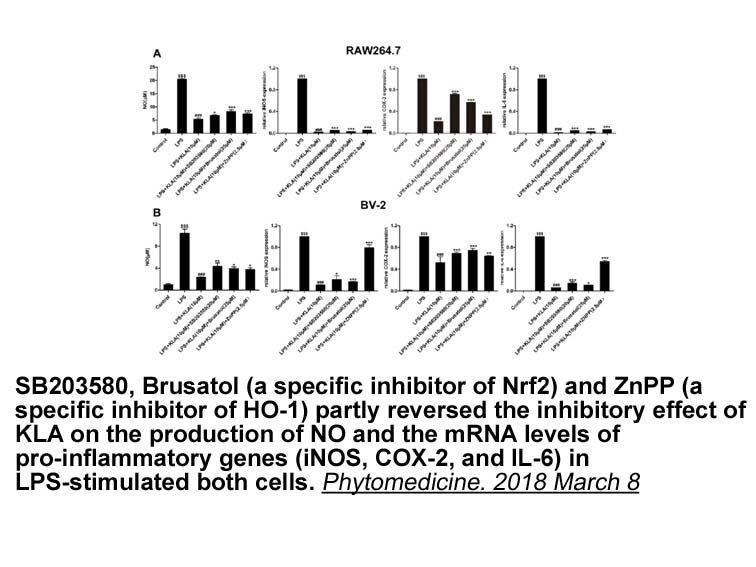
We had earlier reported that collagen fibers with intact native banded structure were occasionally observed in the kinase-deficient, membrane-anchored DDR2 ECD (DDR2/-KD) samples; however, in our DDR1/ECD and DDR2/ECD samples, observation of native banded structure of collagen was far more infrequen
10360 records 429/691 page Previous Next First page 上5页 426427428429430 下5页 Last page